Cedar vs. Pressure-Treated Wood Fencing: How the Two Stack Up
Choosing between cedar and pressure-treated pine is one of the first real decisions you make once you settle on a wood fence. Both build a solid, good-looking barrier around a yard. Both hold up outdoors for years when they go in right. But the two woods get there in completely different ways, and those differences show up in how the fence ages, what upkeep it asks of you, and how it handles the kind of weather we deal with across Lockport, Amherst, Buffalo, Lancaster, and Cheektowaga. We install both, and homeowners ask us to break down the tradeoffs almost every week.
Here is how cedar and pressure-treated pine compare on the things that actually matter over the life of a fence.
Quick Answer: Cedar resists rot and insects on its own because of natural oils in the wood, and it stays straighter over time with less warping and twisting. Pressure-treated pine gets its rot and insect resistance from chemicals forced into the wood under pressure, and it tends to move more as it dries out after installation. Cedar leans toward a cleaner long-term appearance and better dimensional stability. Pressure-treated pine leans toward raw toughness and ground-contact durability. The right pick comes down to which of those traits matters most for your property.
How Each Wood Gets Its Durability
The core difference between these two materials is where the protection comes from.
Cedar is naturally rot-resistant and insect-resistant. The wood contains its own oils and tannins that discourage fungal decay and repel the bugs that chew through softer lumber. That resistance is baked into the board from the day the tree is cut. Nothing has to be added for cedar to stand up to moisture and pests.
Pressure-treated pine starts as ordinary softwood, usually a pine species with a high sapwood content that soaks up preservative well. The boards go into a sealed cylinder where vacuum and pressure drive a waterborne copper-based preservative deep into the fibers. Those chemicals are what protect the wood from termites, other insects, and the fungi that cause decay. The treatment is aggressive and effective, which is why pressure-treated lumber is rated for ground contact and handles constant soil moisture well.
What that means for a fence
For posts set in the ground, pressure-treated pine has a real edge. The buried portion of any wood post lives in the harshest spot on the whole fence, sitting in damp soil that never fully dries. The chemical treatment is built for exactly that punishment. Plenty of installers, including our crews, will use pressure-treated posts even on a cedar fence for that reason, then run cedar for the pickets and rails you actually see.
Above ground, cedar holds its own. Its natural resistance keeps pickets and rails sound through years of rain, snowmelt, and humidity without any added chemistry doing the work.
Appearance and How Each Ages
This is where a lot of homeowners make up their minds.
Cedar has a warm, reddish-brown tone and a tight, even grain that reads as high-end from the street. It takes stain beautifully and looks rich even when left bare at first. Left untreated and exposed to sun and weather, cedar slowly fades to a soft silvery gray. Some people love that weathered, coastal look and let it happen on purpose. Others keep the original color by sealing or staining on a schedule.
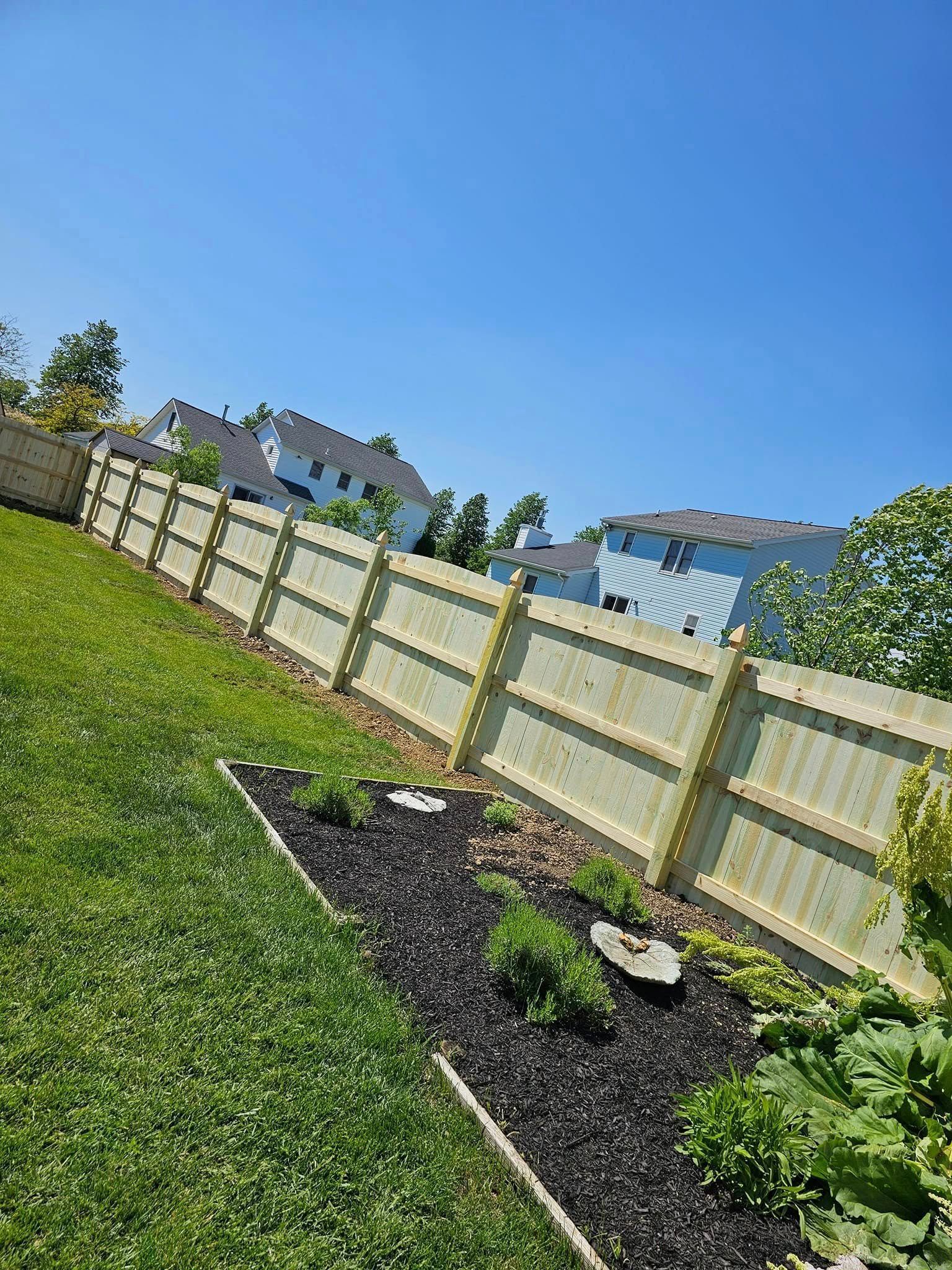
Pressure-treated pine has a more utilitarian look. Fresh boards often carry a greenish or tan cast from the preservative, and the grain is coarser and more knotty than cedar. It can be stained or painted once it has dried out enough to accept a finish, and a good stain closes much of the appearance gap. On its own, though, it weathers to a duller gray and tends to show its knots and grain more plainly than cedar does.
If the visual character of the fence ranks high on your list, cedar usually wins on looks with less effort. If you plan to paint or heavily stain the fence anyway, the starting appearance matters less because the finish carries the look.
Dimensional Stability: Warping, Cupping, and Twisting
Wood moves. It swells when it takes on moisture and shrinks as it dries, and how far a board moves decides how straight your fence stays.
Cedar is dimensionally stable. It shrinks, warps, cups, and twists less than most other fence woods, so pickets tend to stay flat and rails stay straight over the years. That stability is a direct result of the wood's structure and low resin content.
Pressure-treated pine is the tougher case here. The pressure process pushes a water-based solution into the wood, so the boards frequently arrive at the yard still wet, sometimes heavy and damp to the touch. Once that lumber is installed and starts drying in open air, it releases that moisture and shrinks. As it dries unevenly, boards can cup, bow, twist, and check. Field observations back this up: pressure-treated pickets commonly show several times more warping than cedar over the first few years as the wood gives up its treatment moisture. Careful installation and letting the wood acclimate help, but the tendency to move is built into how the material is made.
TIP: If you go with pressure-treated pine, ask about how dry the lumber is before it goes up, and plan to fasten each picket with more than one screw per rail. Two fasteners at each connection hold a board flat and fight the cupping and twisting that show up as pressure-treated wood dries out.
Fasteners and Hardware Matter More Than People Expect
The wood is only half the fence. What holds it together reacts to the wood too, and both of these materials are hard on plain steel.
The copper-based preservatives in pressure-treated pine are corrosive to ordinary steel fasteners. Screws and nails that are not rated for treated lumber can corrode quickly, weakening connections and bleeding rust stains down the boards. The treated-wood industry recommends hot-dip galvanized or stainless steel fasteners and hardware for this reason. Stainless offers the strongest corrosion resistance; quality hot-dip galvanized is the common workhorse.
Cedar has its own quirk. The same natural tannins that fend off rot are mildly acidic, and they react with plain or low-grade steel to leave dark black streaks that run down a fence from every nail and screw head. Stainless steel fasteners sidestep the staining entirely and keep a cedar fence looking clean.
The takeaway is the same for both woods: the right fasteners are not an optional upgrade. They decide whether your fence stays tight and stain-free or streaks and loosens early. We spec corrosion-resistant hardware on every wood fence we build for exactly this reason.
Climate Performance in Western New York
The weather here is the real test. Our fences face lake-effect snow, long stretches of damp, wide temperature swings, and the freeze-thaw cycling that grinds on anything set in the ground.
WARNING: Frost heave is the quiet killer of wood fences in our area. When ground moisture freezes and expands, it can lift and cock posts that were not set below the frost line or that lack proper drainage at the base. Neither cedar nor pressure-treated pine can save a fence from a post that was set too shallow. Post depth and drainage decide whether your fence stays plumb through winter, no matter which wood you pick.
With the posts handled correctly, the two woods respond to our climate differently above ground. Lake-effect moisture and repeated wet-dry cycling are exactly the conditions that make pressure-treated pine move, so those pickets work harder to stay flat here than they would in a drier climate. Cedar's stability is an advantage in this back-and-forth, since it swells and shrinks less with each cycle. On the flip side, the constant ground moisture and snow that pile against the base of a fence play to pressure-treated pine's strength, since its chemical treatment is built to shrug off exactly that kind of sustained wetness.
Heavy snow load is a structural question more than a material one. Both woods carry the weight of drifting and plowed snow fine when the framing is sound, the posts are deep, and the rails are properly sized and fastened. That is a construction detail, and it applies equally to cedar and pressure-treated pine.
Maintenance Over the Years
Neither of these fences is truly zero-maintenance, but the routines differ.
Cedar can be left alone to weather gray, or sealed and stained periodically to hold its color and add a moisture barrier. Because the wood is naturally decay-resistant, skipping the finish does not doom a cedar fence the way neglect punishes some materials. It simply changes color.
Pressure-treated pine usually needs to dry out for a season or so before it will accept a stain or sealer properly, since fresh boards are still shedding treatment moisture. After that, periodic cleaning and re-staining help control its tendency to check and gray, and keep the coarser grain looking its best. The chemical treatment handles the rot side of the equation, so finishing pressure-treated wood is mostly about appearance and surface protection rather than survival.
For both woods, the same habits extend the life of the fence: keep vegetation trimmed back so boards can dry, clear heavy snow off the base when it drifts up against the pickets, and address a loose rail or leaning post before winter can work it worse.
Frequently Asked Questions
Does cedar really last as long as pressure-treated pine?
Above ground, cedar's natural oils keep it sound for many years, and its stability means it often looks better longer. In direct ground contact, pressure-treated pine's chemical treatment gives it the edge for the buried parts of the fence. That is why a lot of well-built cedar fences use pressure-treated posts under cedar pickets, pairing each wood to the job it does best.
Which one warps less?
Cedar. It is more dimensionally stable and moves less as humidity changes, so pickets and rails tend to stay flatter. Pressure-treated pine moves more, especially in its first couple of years as it dries out from the treatment process.
Can I paint or stain both?
Yes. Cedar accepts stain right away and shows off a rich finish. Pressure-treated pine usually needs to dry out for a season first so the finish can bond, but it takes paint and stain well once it is ready.
Why does my neighbor's wood fence have black streaks running down it?
Those streaks usually come from the wrong fasteners. Cedar tannins and treated-pine chemicals both react with plain steel and bleed dark stains down the boards. Stainless steel or proper hot-dip galvanized hardware prevents it.
Will either wood stay put through our winters?
Both will, as long as the posts are set deep enough to beat frost heave and the base drains well. The wood species does not protect against a shallow post. Correct installation is what keeps a fence plumb through freeze-thaw season.
Choosing the Right Wood Fence for You
Cedar and pressure-treated pine are both proven wood fence materials, and neither is the wrong answer. Cedar rewards you with natural rot resistance, a cleaner grain, and better dimensional stability that keeps the fence looking sharp through our wet-and-freeze cycles. Pressure-treated pine answers back with aggressive chemical protection and real toughness where the wood meets the ground. Match the wood to what you care about most, and either one gives you a fence that earns its keep for years.
With 27
years building fences across Lockport, New York, Titan Fence
knows exactly how each wood performs through our lake-effect winters and freeze-thaw cycles. We back every installation with corrosion-resistant hardware and posts set deep enough to beat frost heave, no matter which wood you choose. Ready to compare cedar and pressure-treated options for your yard? Reach out to our crew and let us help you pick the wood built to last here.