Five Wood Privacy Fence Styles and What Each One Actually Blocks
Quick Answer: Wood privacy fencing comes in a handful of distinct styles, and the differences matter more than they look at first glance. Board-on-board and stockade construction block sightlines completely but catch the most wind. Shadowbox and lattice-top designs trade a little privacy for airflow and a finished look on both sides. Horizontal-plank fencing gives a modern appearance but needs thicker boards to span the same distance without sagging. The right pick usually comes down to how much privacy you need, which side faces your neighbor, and how much wind and snow load the fence line takes on through a Western New York winter.
Stand at a lumber yard in early spring and every stack of fence board looks like it does the same job. It doesn't. Walk the aisle a little further and you'll find boards cut for five or six different privacy styles, each one solving the sightline problem in a different way and each one behaving differently once it's standing in a yard through a lake-effect winter. Picking a style based on a photo online is how homeowners end up with a fence that looks right in the brochure and fights the wind every February.
Board-on-Board: Full Privacy From Both Sides
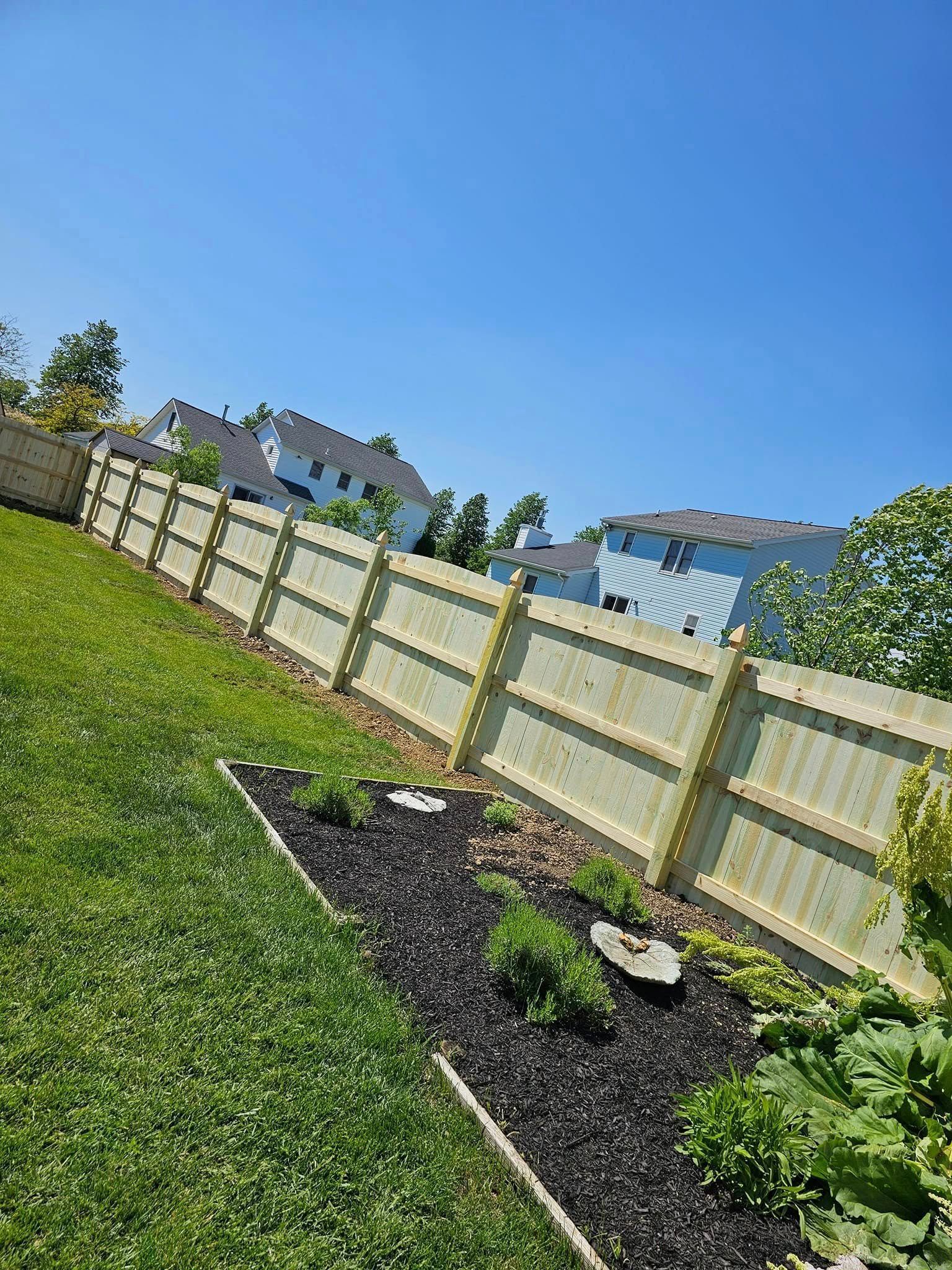
Board-on-board construction alternates vertical boards on opposite faces of the horizontal rails, with each board overlapping its neighbor by roughly an inch. There's no gap to peek through at any angle, and because boards cover both sides of the rail, the fence looks finished from your yard and from the one next door.
That full coverage comes with a tradeoff. A solid wall of overlapping boards acts almost like a sail in strong wind, and Western New York gets its share of that wind off the lake, especially along exposed property lines with no windbreak.
Post Spacing
Closer post spacing and properly set footings matter more on a board-on-board run than on a more open style, since every gust is pushing against a continuous surface rather than passing through it.
Where It Fits
This style works best for backyard perimeters where full privacy is the goal and the fence line isn't the longest, most exposed run on the property. It's also a strong pick where the fence faces a shared yard, since there's no "back side" that looks unfinished from the neighbor's vantage point.
Shadowbox: The Style Built for Shared Property Lines
Shadowbox construction looks similar to board-on-board at a glance, but the boards are spaced apart rather than tightly overlapped, alternating front and back of the rail. From straight on, you still can't see through it. Angle your view even slightly and thin slivers of light show between boards.
That gap is the whole point. Air moves through a shadowbox fence instead of pressing against a solid face, which cuts the wind load a fence line carries during a storm. It's a smart choice for the long, exposed runs where a fully solid fence would take the brunt of every gust. Shadowbox also splits the difference on privacy neatly enough that most homeowners barely notice the tradeoff from normal viewing distances, and because boards alternate sides, both faces look finished. Neither side reads as the "back."
Property lines shared with a neighbor are where this style earns its reputation. Everyone gets a fence that looks the same from their own yard, and nobody is left staring at exposed rails.
TIP: If part of your fence line runs along an open stretch with nothing blocking wind, like a corner lot or a yard that backs up to a field, shadowbox or another gapped style there can hold up better over the years than a fully solid section, even if you keep board-on-board or stockade for the more sheltered parts of the yard.
Stockade and Solid-Board Fencing: Maximum Coverage, Minimum Airflow
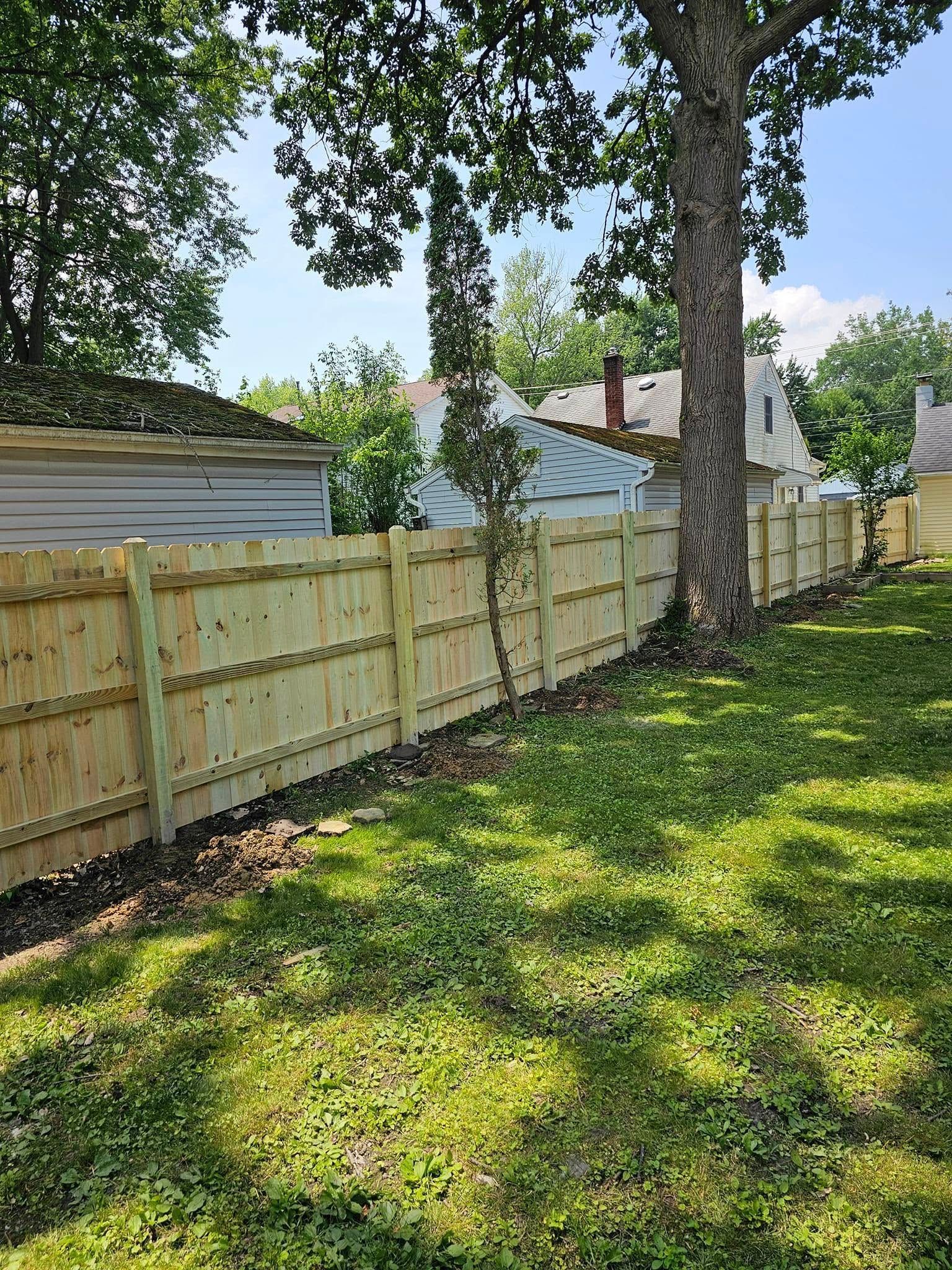
Stockade fencing uses boards set tightly side by side, often with a pointed or rounded top, and no overlap because there's no gap left to overlap. It's the plainest way to build a solid wall out of wood, and it reads as sturdy and utilitarian rather than decorative.
Because there's zero airflow through the face of the fence, stockade and other fully solid vertical designs carry the highest wind load of any wood privacy style. Long uninterrupted runs are where that matters most. A fence that's solid for forty feet in a row is under far more pressure during a windstorm than the same forty feet broken up by posts, gates, or a change in grade. Post depth and concrete footing size need to account for that, not just the height of the fence.
One side of a stockade fence shows the horizontal rails and post faces; the other shows the finished board fronts. That's simply how the style is built, and it's worth thinking about which direction the finished side should face before installation, particularly if the fence runs along a shared line or a street-facing side yard.
Lattice-Top Privacy: Solid Below, Open Above
A lattice-top fence pairs a solid privacy section, usually four to five feet of tightly set boards, with an open lattice panel on top. The lower section handles the actual privacy work at eye level. The lattice above softens the look, lets some light and air through, and keeps the whole structure from feeling like a wall.
This design does real work on wind. A fully solid six-foot fence has to resist wind pressure across its entire height. A lattice-top fence with the same overall height only presents a solid face for the bottom four or five feet, and the open lattice section above relieves pressure instead of catching it. That's a meaningful difference on a long fence line during a windy stretch, and it's one reason lattice-top designs hold up well along exposed backyards that catch wind coming off open land.
WARNING: Don't assume a lattice-top fence gives you the same privacy at eye level while seated on a deck or a second-floor porch. The open section starts right where the solid boards end, and looking down from a height that gap can expose more of the yard than it would from ground level. If privacy from an upper window or deck matters, plan the solid section's height around that sightline specifically, not just standing eye height in the yard.
Horizontal-Plank Fencing: The Modern Look With Different Rules
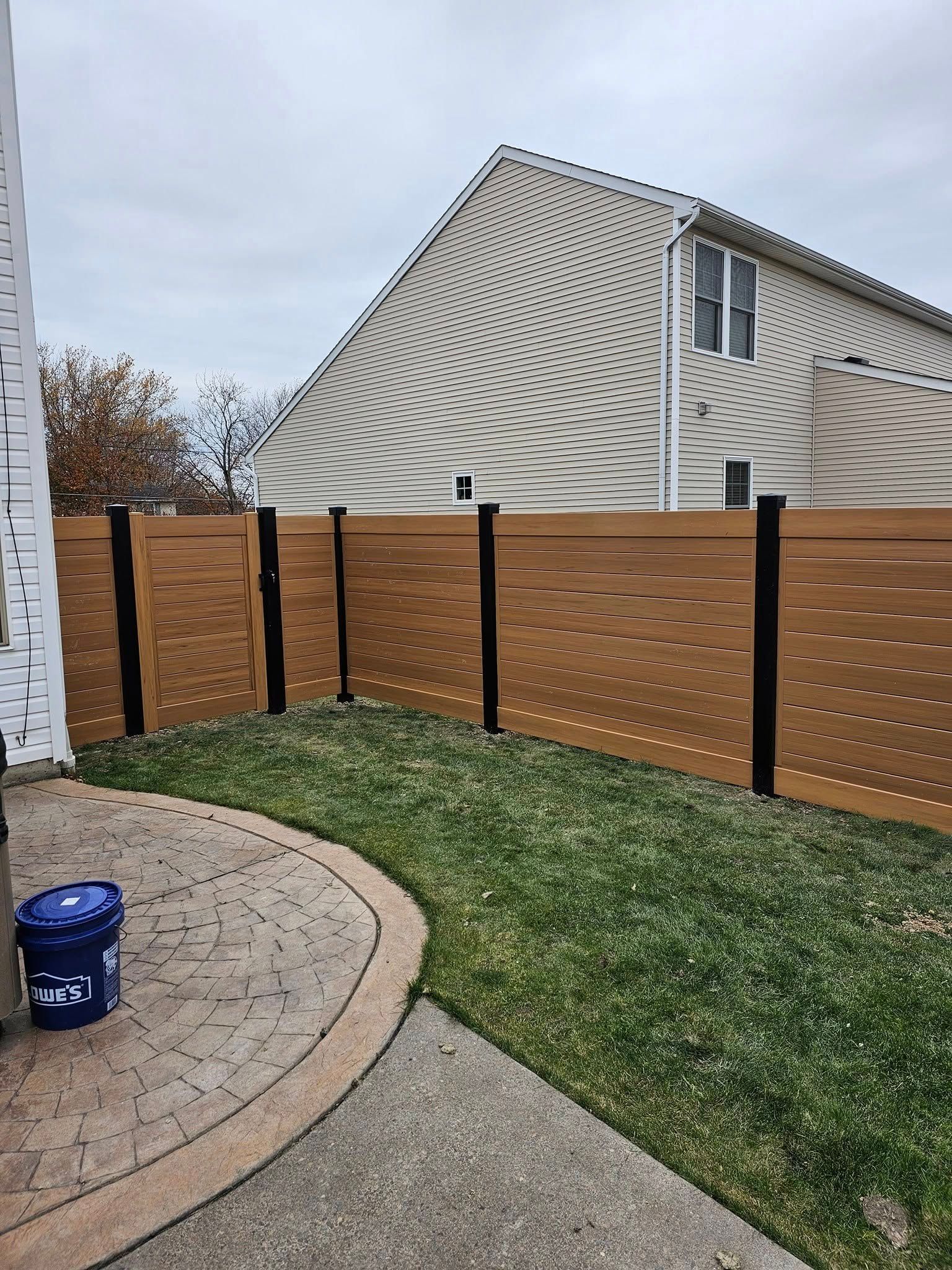
Horizontal-plank fencing turns the whole design sideways. Instead of vertical boards running between two horizontal rails, wide boards run the full distance between posts, stacked from the ground up. It's become one of the most requested looks in the last several years, and it reads as clean and contemporary next to a traditional vertical picket or board style.
The engineering underneath is different, though. Vertical boards only span the gap between two rails, usually two or three feet. Horizontal boards span the full distance between posts, which is typically six to eight feet, without anything supporting the middle of the board. That longer unsupported span means horizontal fencing needs thicker stock than a vertical design uses; thin boards sag noticeably over a season or two, especially once they've absorbed some moisture. Post spacing tighter than the standard layout used for vertical styles helps keep those spans manageable.
Airflow depends on how the boards are installed. Butted tight against each other, a horizontal fence behaves like any other solid design and carries a similar wind load. Left with even a small reveal between boards, it opens up airflow the same way a shadowbox or lattice-top design does, without changing the overall look nearly as much as most homeowners expect.
Matching a Style to Your Yard, Not Just a Photo
None of these styles is universally the "right" one. The right call depends on how the fence line sits on the property. A short, sheltered backyard run behind a house and a garage rarely sees the wind that a long, exposed side yard on a corner lot does, and a style that performs fine in one spot can struggle in the other on the same property.
Which side faces which direction matters just as much as the style itself. Board-on-board and shadowbox both finish cleanly on both faces, which removes the guesswork about which way to orient the fence. Stockade and standard board fencing have a clear front and back, and it's worth deciding early which side should face outward, since that decision gets locked in the moment the posts go in the ground.
Snow load adds one more Western New York wrinkle that a lot of fence photos from warmer climates don't account for. Drifting snow piles harder against a solid fence face than a gapped one, and a long solid run in a spot that catches drifting wind can end up carrying real weight against the lower boards by February. A style with some airflow built in, or a lattice-top design that opens up above the drift line, sheds that load more evenly than a fence that's solid from the ground to the top rail.
Frequently Asked Questions
Which wood privacy fence style offers the most privacy?
Board-on-board and stockade both eliminate sightlines completely since neither has a gap at any viewing angle. Shadowbox and lattice-top trade a small amount of that coverage for better airflow and a lighter overall look.
Does a privacy fence need to be completely solid to work?
Not necessarily. Shadowbox and lattice-top designs still block direct views from normal standing height and distance, even though they include small gaps. The gaps mostly show up when someone is standing close to the fence and looking at an angle.
Why does wind matter for a fence style choice?
A solid fence face catches wind the way a sail does, pushing that force straight into the posts and footings. Styles with gaps or an open top section let some of that wind pass through instead of loading the whole structure at once.
Can horizontal-plank fencing be built for full privacy?
Yes, when the boards are installed with little to no gap between them. The main difference from vertical styles is the board thickness needed to span between posts without sagging over time.
Does one side of a privacy fence always look different from the other?
Only with styles that have a distinct front and back, like standard stockade or board fencing. Board-on-board, shadowbox, and most lattice-top designs are built so both sides look finished.
How does snow affect the choice between a solid and a gapped fence style?
A fully solid fence face gives drifting snow more surface area to pile against, which adds weight low on the fence through the winter. Styles with some airflow, or an open section near the top, tend to shed that load more evenly.
Choosing A Fence Style Built For Your Yard
No single fence style wins across every yard, and treating them as interchangeable is how homeowners end up with boards sagging or snow piling against a fence line that was never built for that spot. Wind exposure, which side faces a neighbor, and how snow tends to drift through winter all shape which style actually holds up long term. A little extra thought before the posts go in saves a lot of frustration once the fence has stood through its first real season.
Titan Fence
has spent 27
years helping homeowners across Lockport, NY, match fence styles to the specific conditions their property actually faces, not just the photo that caught their eye. That kind of on-site judgment is what separates a fence that ages well from one that needs early repairs. Walking a property line before committing to a style is a small step that pays off every winter the fence stands there doing its job quietly.